



Hose reels take more abuse than almost anything else on a rig. They shake and rattle down the road every day, and the pressure reel gets a jerk from the unloader every time you let off the trigger, with full pressure running through it the whole time you're washing. Bolts back out, chains rust, and bleach eats whatever it lands on. Most of the reel problems that come through our shop trace back to maintenance nobody did.
We ran our own pressure washing business for more than 10 years before we started building equipment, and we had reels loosen up on us the same as anyone. This is what we tell every customer who picks up a manual reel or an electric reel from us, or a build with reels on it. It takes a few minutes every 3 months. Skip it and you get premature wear, and in the worst case a reel that comes apart on the job.
Every Reel, Manual or Electric
Check every bolt every 3 months
This is the big one. The most important bolts on the reel are the long rods that run all the way through the barrel and hold it to the two side plates. Those rods take the full vibration load. If they work loose, the barrel starts to wobble, and if you keep running it that way the whole reel can fall apart.
Go around the entire reel: barrel rods, side plate bolts, hose guide, swivel, and the bolts that mount the reel to your skid, trailer, or van. Snug everything down. Tight is enough. Don't crank on them hard enough to strip a thread or distort the frame.
Do this every 3 months at a minimum, and sooner if you feel any play in the barrel. The pressure reel needs it the most because of the unloader shock, but check every reel on the rig. This is all normal wear and tear from shaking and rattling around. It isn't a sign anything is wrong with the reel, it's just what vibration does to bolts.
Keep bleach off your reels
Sodium hypochlorite pits aluminum, corrodes fittings, and leaves a white crust behind. Overspray and drips land on reels all day, and the soft wash reel sits right next to the source. If bleach gets on a reel, rinse it off with fresh water right away. Don't let it sit until the end of the day.
Our reels are full-frame aluminum with stainless steel internals, so bleach won't rust the guts, but it will still chalk and pit the aluminum if you let it sit. Wipe every reel down at the end of each day. A clean reel lasts longer, and a loose bolt or a weeping swivel is a lot easier to spot on a clean reel than on one caked in grime.
Watch the swivel
The swivel is the main wear item on any reel. Bleach gets into the soft wash swivel, and the pressure swivel takes the unloader shock. If a swivel starts leaking or wobbling, replace it. We replace pressure and soft wash swivels every 2 years whether they look bad or not. It's cheaper than a failure on the job.
Don't grease the zerk fitting on the swivel. Most people over-grease, which blows out the seals and kills the swivel early, and grease won't make a swivel last longer with bleach running through it. Most of our builds use the Super Swivel, and we carry the Mosmatic 1/2" stainless swivel if you need a slimmer profile. Replace the stainless hose barb at the same time. Swivel sizes and barbs are covered in our rig maintenance guide.
Wind the hose on straight
Keep the hose running through the hose guide and layered evenly across the barrel. Hose piled up on one side bends side plates, grinds on the frame, and makes an electric motor work harder than it should. Don't stuff more hose on a reel than it's rated for.
Before you pull the trigger on the pressure washer, make sure the pressure hose isn't kinked or caught on the reel. A hose that's bound up under pressure sends a shock through the swivel and the barrel rods. If your garden hose kinks where it leaves the reel, we cover the fix in The Garden Hose Kink at Your Reel, and How We Fixed It.
Lock it for the road
Lock every reel before you drive and when the rig is parked for storage. A barrel that free-spins down the road unwinds hose and slams back and forth, which beats on the swivel and loosens the rods faster.
Freezing weather
If the rig sits in freezing temperatures, drain or blow out the hoses and reels. Water frozen in a swivel or a hose will crack it.
Manual Reels
Never run the reel with the locking pin in
The locking pin on the side of a manual reel is for storage and driving only. Pull it before you pull hose, and leave it out the whole time you're working. Yank hose off a reel that's still locked and all that force goes into the pin and the side plate. That's how pins bend, pin holes get wallowed out, and side plates crack. Pin in when you park, pin out when you work.
Electric Reels
Oil the chain every 3 months
Electric reels drive the barrel with a chain, and the chain is the first thing to rust. A rusty chain stretches, skips, and eats the sprockets, and then you're replacing a lot more than a chain. Oil it every 3 months. Wipe the grime off first so you're not working oil into grit. If the reel lives in the weather or catches a lot of overspray, oil it more often. A hose reel chain cover keeps overspray and road grime off the chain between services.
Lube the motor bearings
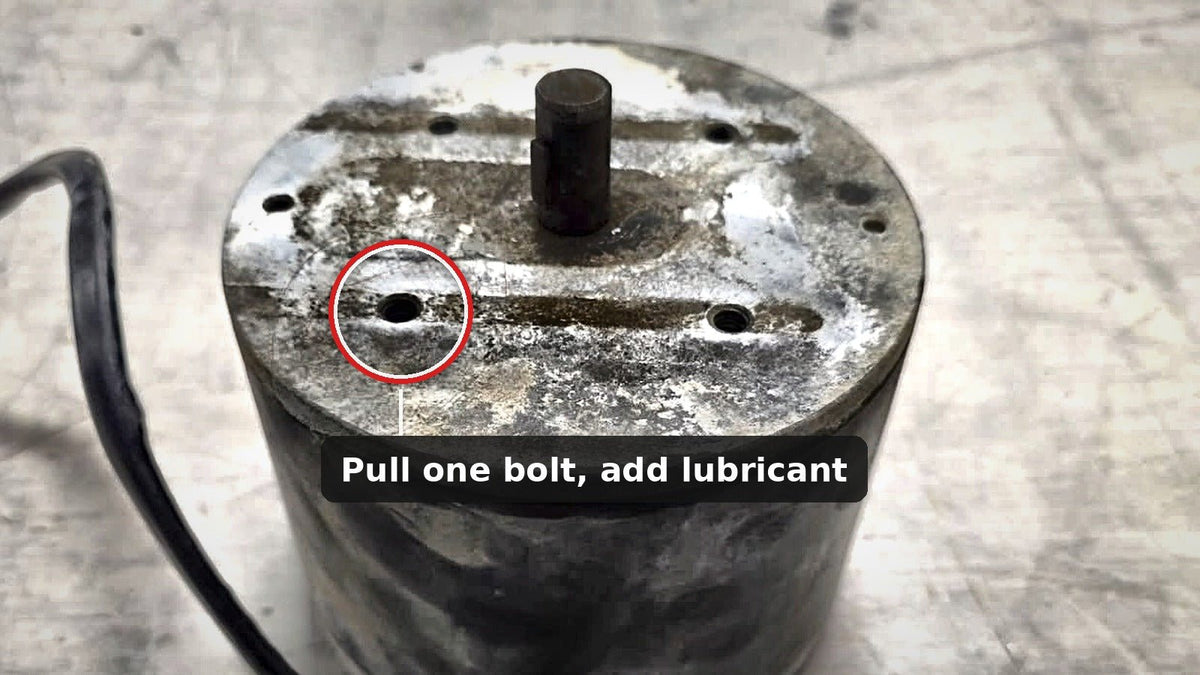
The motor has a few bolts on the shaft side. Take one of those bolts out, add some lubricant inside, and put the bolt back. That gets lubricant to the motor bearings. Do it every time you oil the chain.
Clean the electrical connections
Corrosion on the terminals is the most common reason an electric reel gets slow, runs hot, or quits. Bleach fumes go after bare copper fast. Check the wire connectors, lugs, and terminals, including the ground, and clean off any corrosion you find. Then coat every lug and terminal with dielectric grease so it can't build back up. Do this on the same 3-month schedule as the chain.
Don't fight a stalled reel
If the reel stalls or struggles, let off the switch. Holding the button down on a stalled motor cooks it. Find the cause: hose bound up on the barrel, a low battery, or a corroded connection. Low voltage makes the motor pull more amps and run hot, so keep your battery charged. The electric reels usually run off the same marine battery as the soft wash system, so a marine battery charger on it overnight takes care of both.
What a Worn-Out Reel Looks Like
- Barrel wobbles side to side: the barrel rods are loose. Tighten them now.
- Swivel drips or wobbles: replace the swivel and barb.
- White crust or pitting on the frame: bleach has been sitting on it. Rinse and wipe more often.
- Rusty or sagging chain: oil it, and if it's stretched, replace it before it takes the sprockets with it.
- Electric reel runs slow or hot: corroded terminals or a low battery.
- Bent hose guide or side plate: hose has been piling up on one side or getting pulled hard at an angle.
Hose Reel Maintenance Schedule
| When | What to do |
|---|---|
| Every job | Rinse bleach overspray off the reels right away; pull the locking pin before using a manual reel; make sure the pressure hose isn't kinked before you pull the trigger |
| Daily | Wipe the reels down; lock every reel before driving; charge the battery overnight (electric) |
| Every 3 months | Check every bolt, especially the barrel rods and mounting bolts; oil the chain and lube the motor bearings (electric); clean the terminals and apply dielectric grease (electric) |
| Every 2 years | Replace pressure and soft wash reel swivels and barbs, even if they seem fine |
| Before freezing weather | Drain or blow out the hoses and reels |
| As needed | Swivel (if it leaks or wobbles), chain, hose guides, hoses |
Parts to Keep on Hand
- Super Swivel (1/2" or 3/4") and a stainless hose barb
- Hose reel chain cover (electric reels)
- Hose reel guides
- Dielectric grease and chain oil
- Pressure hose reel whip line and garden hose reel whip line
If a reel is past saving, our Expert Full Frame Aluminum Hose Reels come in manual and electric. Full-frame aluminum with stainless steel internals, no powder-coated steel to rust out on you. They ship freight.
Frequently Asked Questions
How often should you oil the chain on an electric hose reel?
Every 3 months, and more often if the reel sits in the weather or takes a lot of bleach overspray. Never let it get rusty.
Should the locking pin be in while using a manual hose reel?
No. The pin is for storage and driving only. Pull it before you pull hose.
Should I grease my hose reel swivel?
We don't recommend it. Over-greasing blows out the seals, and grease won't extend the life of a swivel that sees bleach. Replace swivels as needed and every 2 years regardless.
Why does my electric hose reel run slow?
Usually corroded terminals or a low battery. Clean the connections, apply dielectric grease, and charge the battery. If it still struggles, check that the hose isn't bound up on the barrel and that the chain isn't rusted or stretched.
Why is my hose reel barrel wobbling?
The long rods that hold the barrel to the side plates have worked loose. Tighten them right away. Keep running a wobbling reel and the holes wallow out until the reel comes apart.
When to Bring It In
Everything above is maintenance you can handle yourself in a few minutes. If a reel has gotten past that point, bring it to the shop. We service pressure washing equipment every day, including reel rebuilds and swivel replacements. If you're not local and you bought your reel or your build from us, call and we'll walk you through it over the phone.
Call us at 503-403-6185 or stop by the shop at 13896 S Fir St Suite B, Oregon City, OR, Monday through Thursday, 8am–4pm.


