



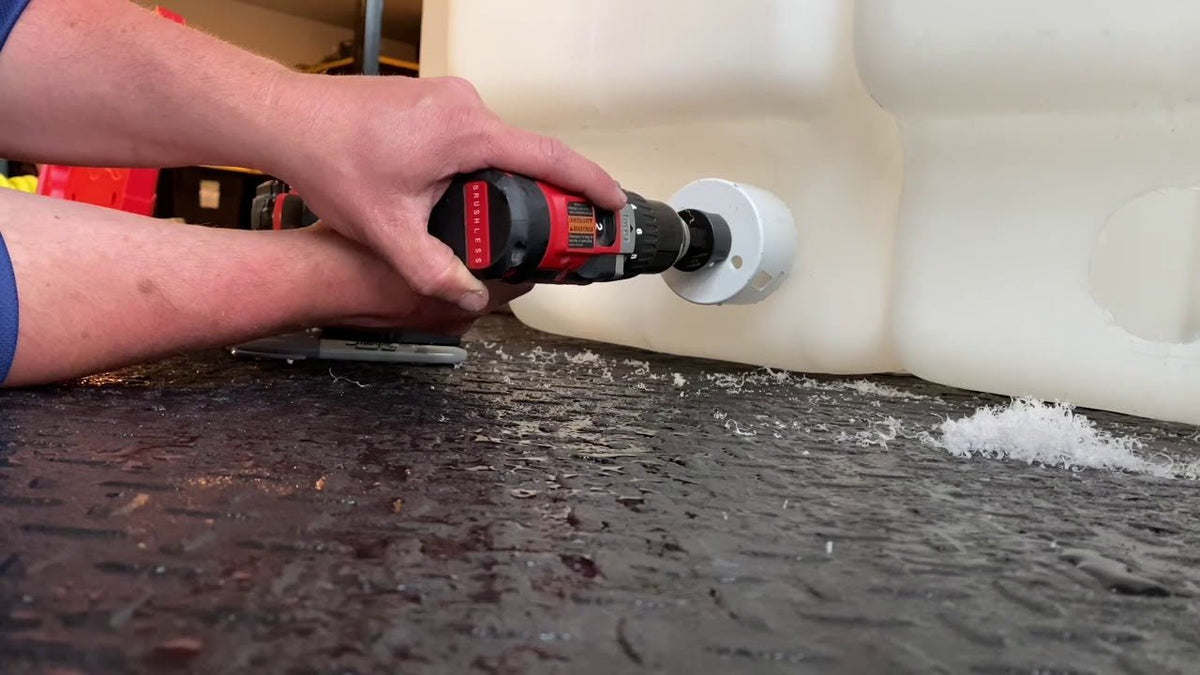
Installing a bulkhead is one of those jobs that is genuinely easy once you have done one, and mildly terrifying the first time because you are about to put a three-inch hole in an expensive tank. Here is how we do it on the 100 gallon tanks we build with.
Hole size
For an inch-and-a-half bulkhead, a 3-1/8 inch hole saw is a perfect fit — we have done it both ways and that is the one. A 3-1/4 will work and goes in a little easier, but it is a looser fit. Anything smaller and you will be fighting it.
Where to drill
This is the mistake that costs you a tank. The bulkhead has a nut that has to spin on the inside, so you need clearance around the hole. Mark a line where the bottom of the fitting will sit and make sure your hole is high enough above it that the nut can turn freely. Drill it too low and you will not be able to spin the nut, and there is no undoing a hole in a poly tank.
Plan the layout before you cut. On a typical two-tank setup we run two bulkheads to tie the tanks together and one as the outlet, spaced so none of them is crowding the side wall of the tank.
Clean out every shaving
When the hole saw comes through it leaves a rim of plastic curls, and they stick to everything. Those shavings will find their way into your mixing device or proportioner and ruin your day.
If you are drilling several holes and fitting pickup tubes, leave the cleanup until the end — but do it thoroughly, with a shop vac, before any liquid goes in the tank. This is the step people skip and then spend an afternoon diagnosing a mixer that will not meter properly.
The broom handle trick
Slim tanks are the problem: the fill opening is at the top, the hole is down the side, and there is no way to get your hand in there to hold the bulkhead while you thread the nut from outside.
So use a broom handle. Seat the seal on the bulkhead, drop the assembly down through the top of the tank on the end of the handle, line it up with the hole, and push. Then go around to the outside and fish it through. It is a bit of a wrestle solo — much easier if someone can hold the handle while you thread — but it works every time and needs no special tools.
Two things to check as you go: that the seal is still seated and has not slipped off on the way down, and that you have the bulkhead facing the right way before you commit.
A note on tank plumbing
Bulkheads are the right fitting for water and buffer tanks. Be careful using rubber-sealed bulkheads on chemical tanks — various chemicals will attack the seal over time, and the seal is what fails.
Tying two tanks together through bulkheads with an inch-and-a-half hose and 90 degree barbs also does something people do not expect: it baffles the water between the two tanks and noticeably reduces sloshing compared with one large tank.
Shop bulkheads, buffer and chemical tanks, tank plumbing and fittings. Or skip the drilling — our builds come plumbed, tested and with training included.


